

A contact center project does not always start with a platform replacement. In many organizations, the first question is more practical: can we improve the customer experience without asking the business to move every call, queue, and representative workflow at once?
Microsoft Contact Center Intelligence (CCI), announced in public preview on October 21, 2026, is aimed at that gap. Microsoft describes it as a way to add purpose-built agents, quality evaluation, and analytics to an existing contact center. An open connector is the integration point for third-party platforms, with Microsoft naming Five9, Cisco Webex Contact Center, and Avaya as examples.
The announcement pairs voice biometric authentication with the customer conversation harness in Copilot Studio. They address different parts of the design: CCI connects intelligence to the contact-center environment, while the harness is where makers build and test customer-facing voice and chat agents.
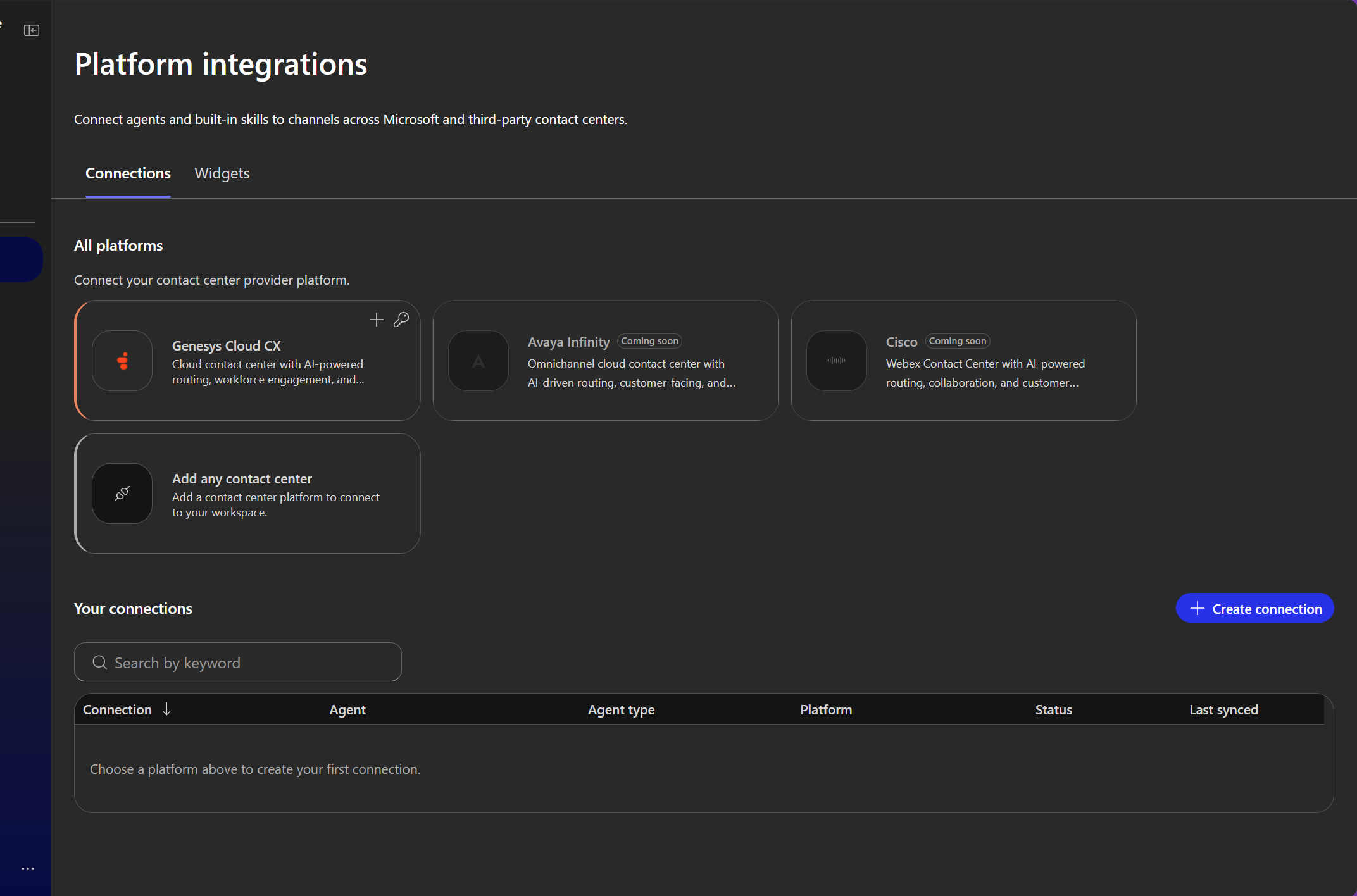
The CCI portal presents contact-center integrations alongside the agent experience. The available connector and deployment details should be checked for the target environment.
CCI adds intelligence to an existing contact center
CCI’s central architectural claim is that an organization can add conversational AI to a contact center it already operates. The Microsoft announcement positions CCI as a layer for self-service agents, quality assurance, and analytics, rather than requiring a multi-year rip-and-replace first.
The open-connector approach matters because the agent needs to fit into the existing service path. A customer may start with self-service, move to a representative, and still need the context of that interaction to travel with them. Microsoft says Customer Assist Agent can support deterministic flows, generative interactions, or a mix, with handoff to a human representative through the contact center or Microsoft Teams when the configured criteria call for it.
Those capabilities do not remove the integration work. Teams still need to verify which connector is supported for their platform, what vendor licensing or API charges apply, how routing and escalation are configured, and what data is available to the agent. Microsoft notes that some contact-center vendors may charge separately for API access or voice-channel licenses.
Voice biometrics moves identity into the call
CCI also adds native support for voice biometric enrollment and authentication. A customer can choose to use a voiceprint to verify their identity during a live call, so verification can happen within the conversation rather than through a separate step. Microsoft says authentication can be preserved when the interaction is handed to a human representative.
Voice verification inside the call may reduce friction, but biometrics deserve their own review. A voiceprint is sensitive identity data. Before enabling the feature, teams should understand the enrollment and authentication experience, consent and fallback paths, access to biometric data, retention and deletion behavior, fraud controls, and how the process works for customers who cannot or do not want to use a voiceprint. These are implementation questions to resolve with security, privacy, legal, and contact-center owners, not assumptions to make from a product announcement.
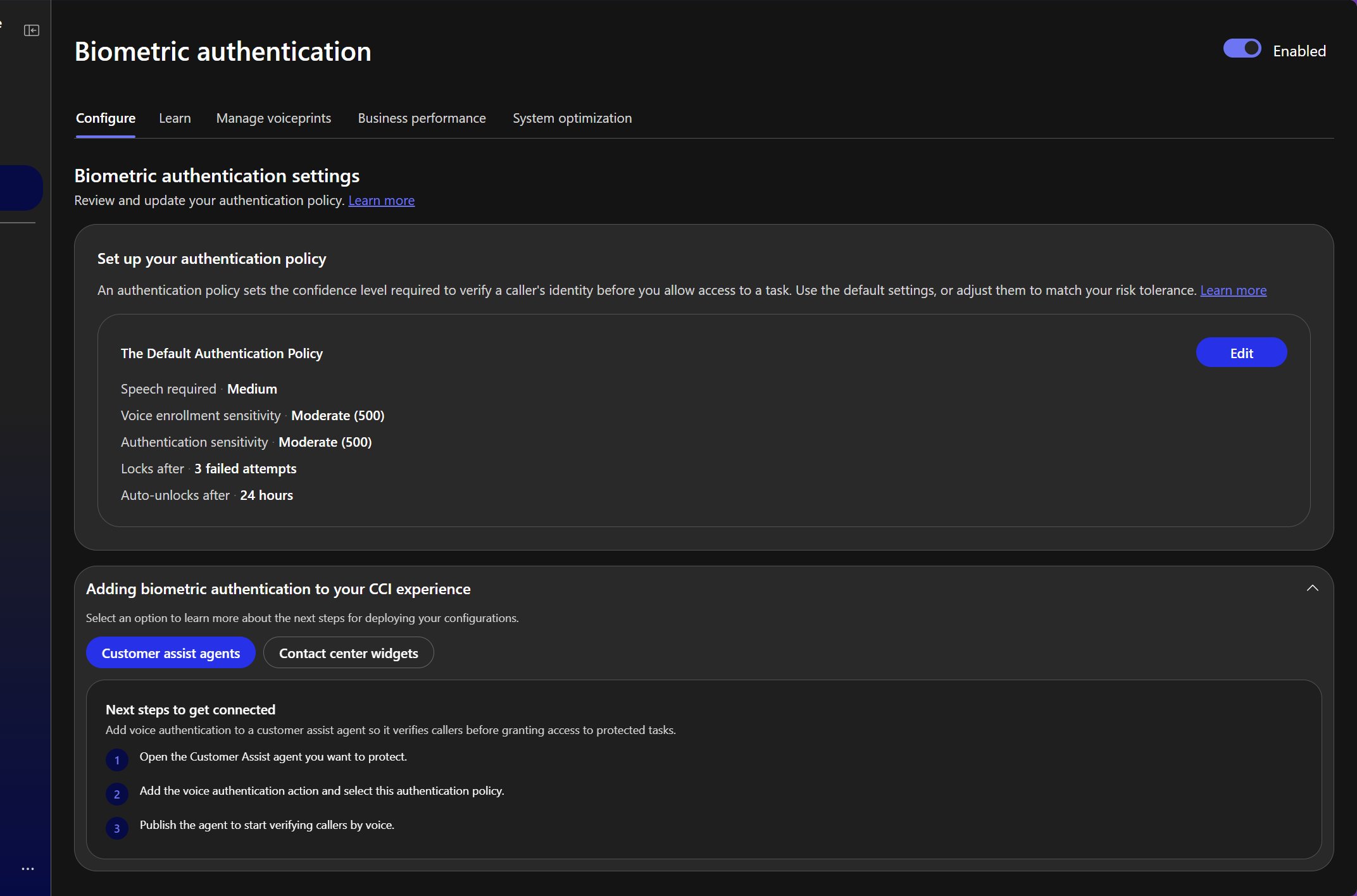
The biometric-authentication configuration area in the CCI portal showing how it can be deployed to either Voice or Chat interfaces.
Microsoft’s documentation covers enabling biometric authentication, configuring it, deploying it on the voice channel, and creating a Customer Assist Agent. Treat those as separate deployment steps: turning on the capability is not the same as having a complete voice experience ready for customers.
The customer conversation harness is the agent-building side
The new customer conversation harness in Copilot Studio is a purpose-built experience for customer engagement. Microsoft describes voice and chat in one agent, specialized agents working together, connections to knowledge and tools, and handoff to human representatives. It also connects to CCI for organizations using a third-party contact center.
In the supplied screenshots, the harness appears alongside an agent-building flow and a voice authentication topic. A working contact-center agent still needs defined scenarios, knowledge, tools, escalation conditions, channel behavior, and test coverage. The harness gives makers a place to assemble and evaluate those parts before deployment.
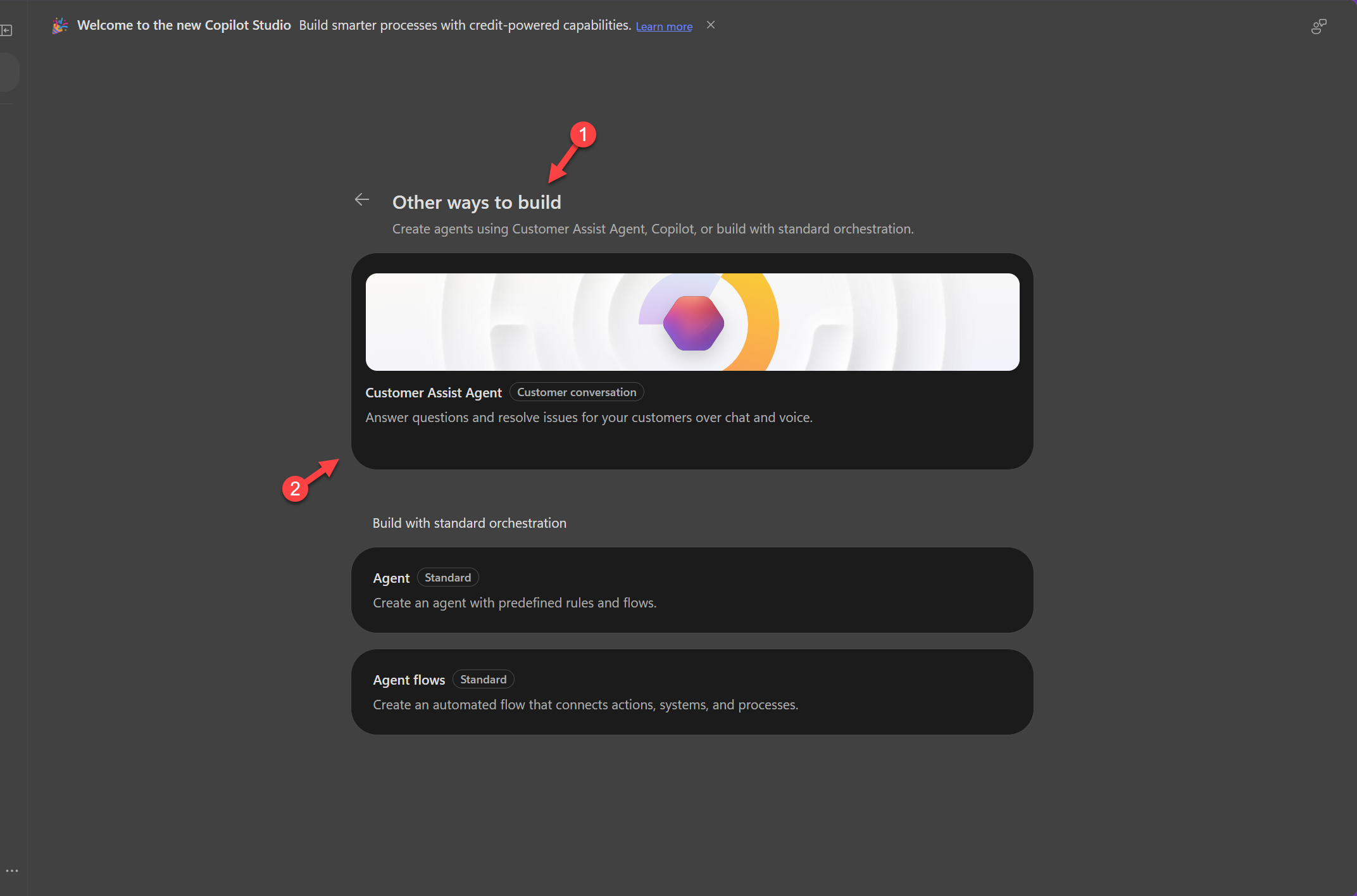
You can create an agent using the new Customer Conversation harness under Other ways to build.
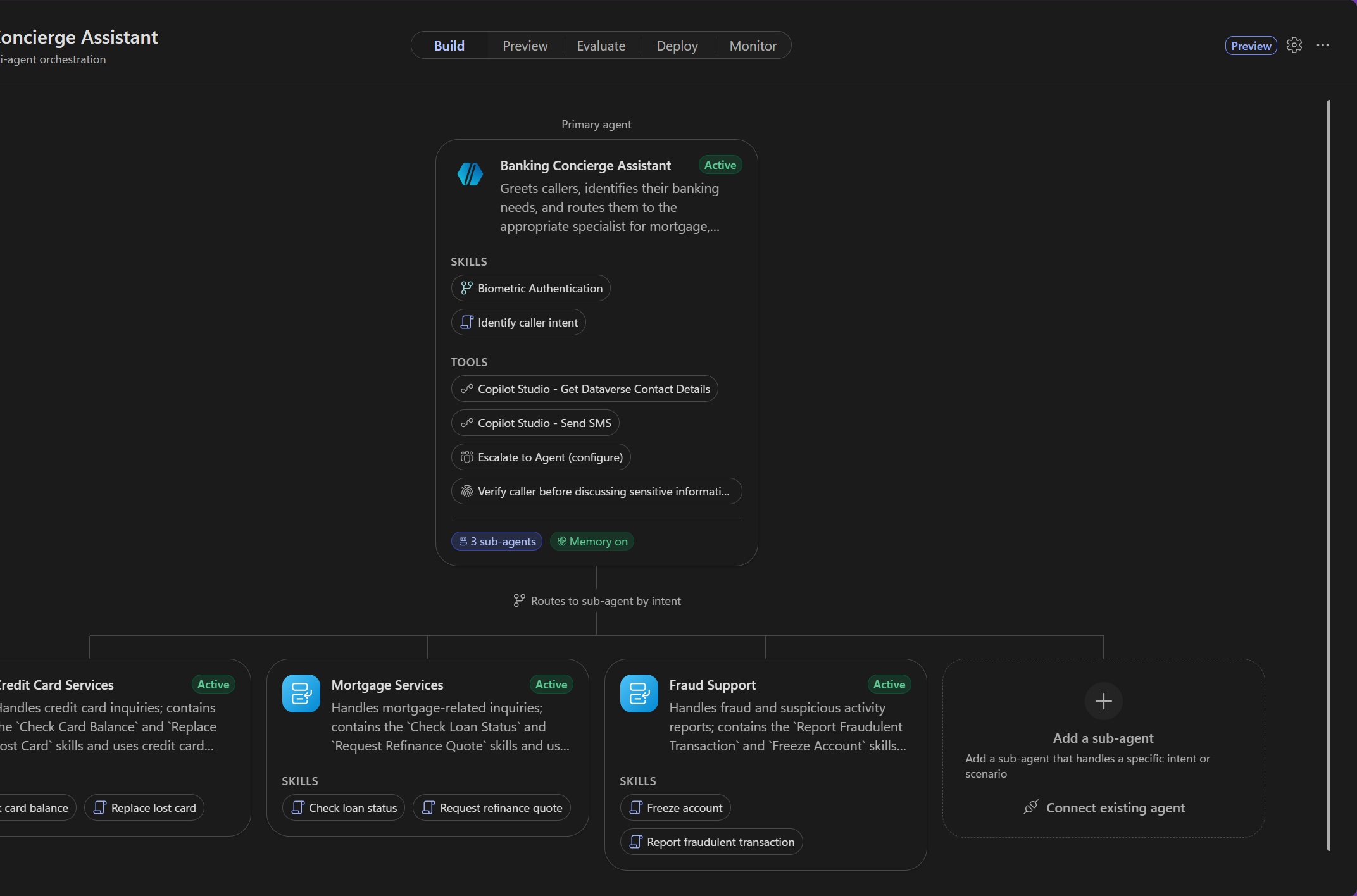
Using just a prompt, the harness can quickly build out an orchestration agent with several sub-domain child agents with prebuilt skills.
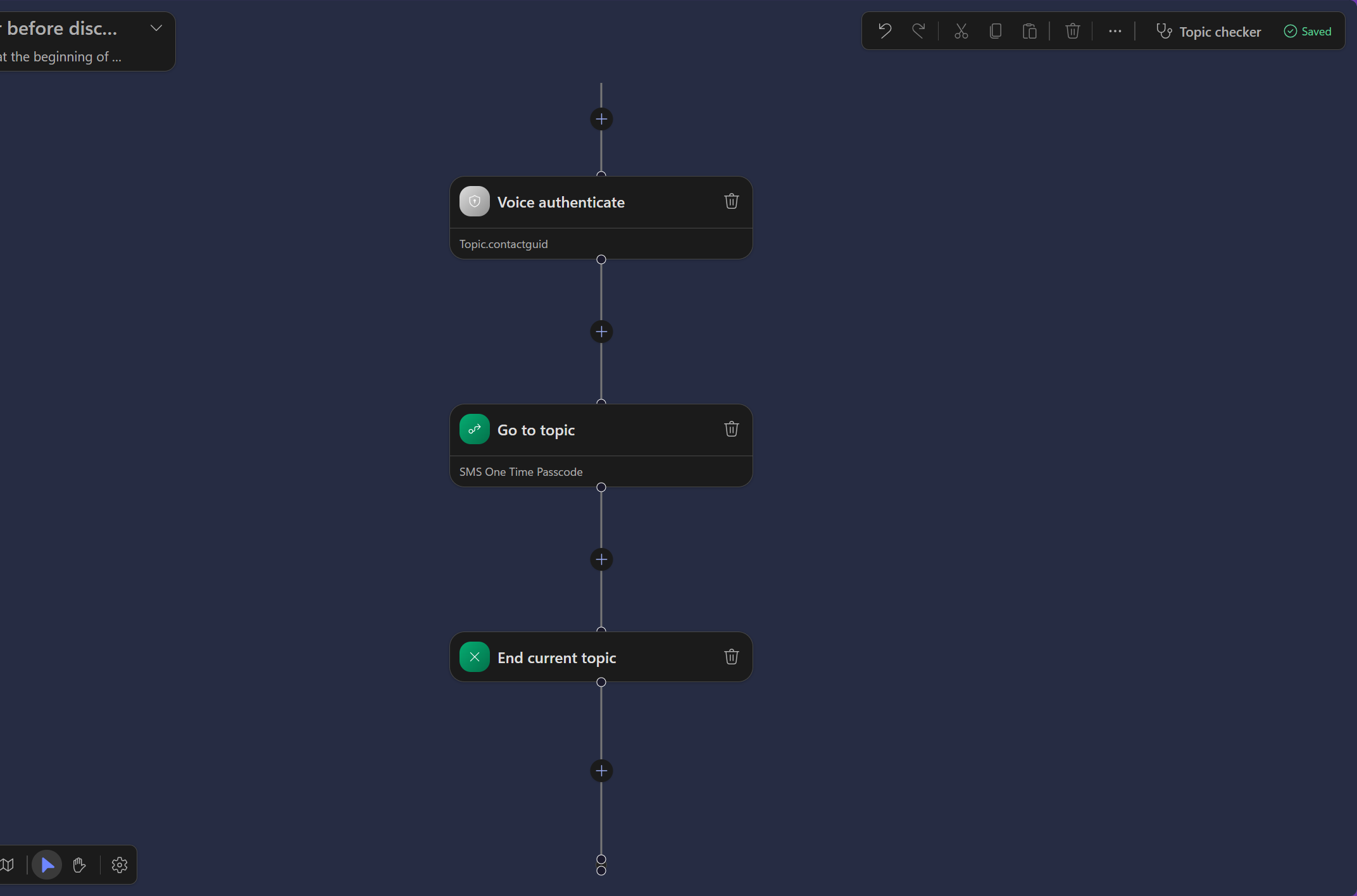
An example topic flow places voice authentication between the start of the conversation and the next conversational step.
A sensible first pilot
Start with one frequent, well-bounded call reason. Confirm that the existing contact-center integration supports the path you need, then define the self-service outcome and the conditions that trigger a representative handoff. If voice biometrics are in scope, design enrollment, consent, non-biometric fallback, and escalation together rather than treating authentication as an isolated feature.
Then test the whole journey: the customer’s first utterance, the agent’s use of approved knowledge, the identity step, the handoff, and the context the representative receives. Measure whether the experience resolves the selected need and whether customers can reach a person when they need one. Add quality evaluation and analytics to the pilot so the team can see where the conversation succeeds or breaks down.
CCI and the customer conversation harness are both in public preview. Teams can use the preview to map the architecture and validate a narrow scenario. Check the current documentation and preview limitations before committing to a production design.